


- The Macro backdrop
- Where will the oil price go next?
- How the hawkish Fed could reshape markets
- UK: Where interest rates could go next
- The impact of higher sovereign yields
- The equity market view
- The commodities outlook
- Earnings deep dive: hyperscaler capex concerns and a high bar for Q3
- The Macro backdrop
- Where will the oil price go next?
- How the hawkish Fed could reshape markets
- UK: Where interest rates could go next
- The impact of higher sovereign yields
- The equity market view
- The commodities outlook
- Earnings deep dive: hyperscaler capex concerns and a high bar for Q3
As we start a new quarter, geopolitical risks remain front and centre. The Middle East war is not officially over, with the main conflict between the US and Iran now centred around control of the Strait of Hormuz. The newsflow around this has been positive as we move to the end of Q3. The US has claimed to have cleared the main shipping routes of dangerous mines, to ensure the safe passage of oil tankers , and added to this, the Iranians have offered to reopen the Strait, if the US lifts its port blockade.
Where will the oil price go next?
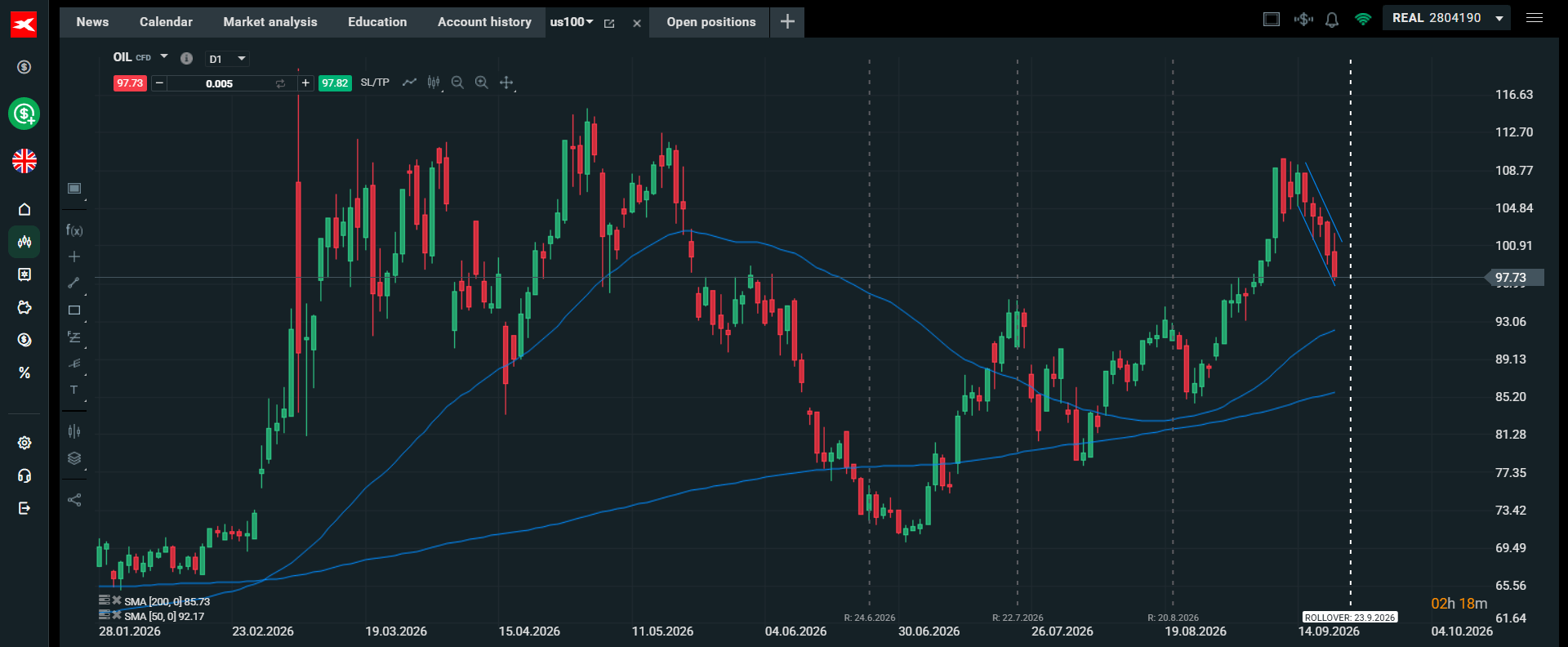
While there is still no official ceasefire, there are signs that talks between the two sides could resume, which has taken the pressure off the oil price, and pushed Brent crude below $100 per barrel.
While this is an improvement from the $110 highs that looked like a possibility after Saudi Arabia’s East-West pipeline was bombed by the Houthis, most mid-year forecasts assumed that the price of Brent crude would trade around $80 per barrel in Q4, and we are still some way away from this level.
How the hawkish Fed could reshape markets
Another major development as we move into the final three months of the year is that monetary policy has turned hawkish. The Fed hiked interest rates to 3.75–4.00% in September, the ECB hiked the week before, and the BoJ also raised interest rates. Most FOMC members see the need for another hike before the end of the year, with even chances of a rate hike in October or December this year.
UK: Where interest rates could go next
The BoE was an outlier compared to its peers in Q3, and held interest rates at 3.75% in a 6–3 vote in September. Markets are still pricing in a November or December hike as most likely, and the Bank sees CPI peaking above 4% in early 2027. The BOE may not be an outlier for long, and BOE meetings on the 5 Nov and 17 December should be watched closely.
The impact of higher yields
The third quarter was notable for the upside pressure on long end yields. The US 10-year Treasury yield touched 4.97% during the oil price spike, and UK gilts are exposed to the same dynamic.
In the UK, yields rose sharply in Q3, with yields higher by approx. 40 bps across the curve. This makes for a difficult backdrop to October’s Budget, and it is also pushing up the UK’s debt interest burden to a record high. Mortgages have surged in price and they could rise further if we don’t see an improvement in the geopolitical situation and a decline in the price of oil. Overall, central banks and geopolitics will determine if the UK economy can replicate strong rates of growth in the first half of the year, and if not, then the BOE will be stuck in a tricky position as we move through to the end of the year.
The equity outlook
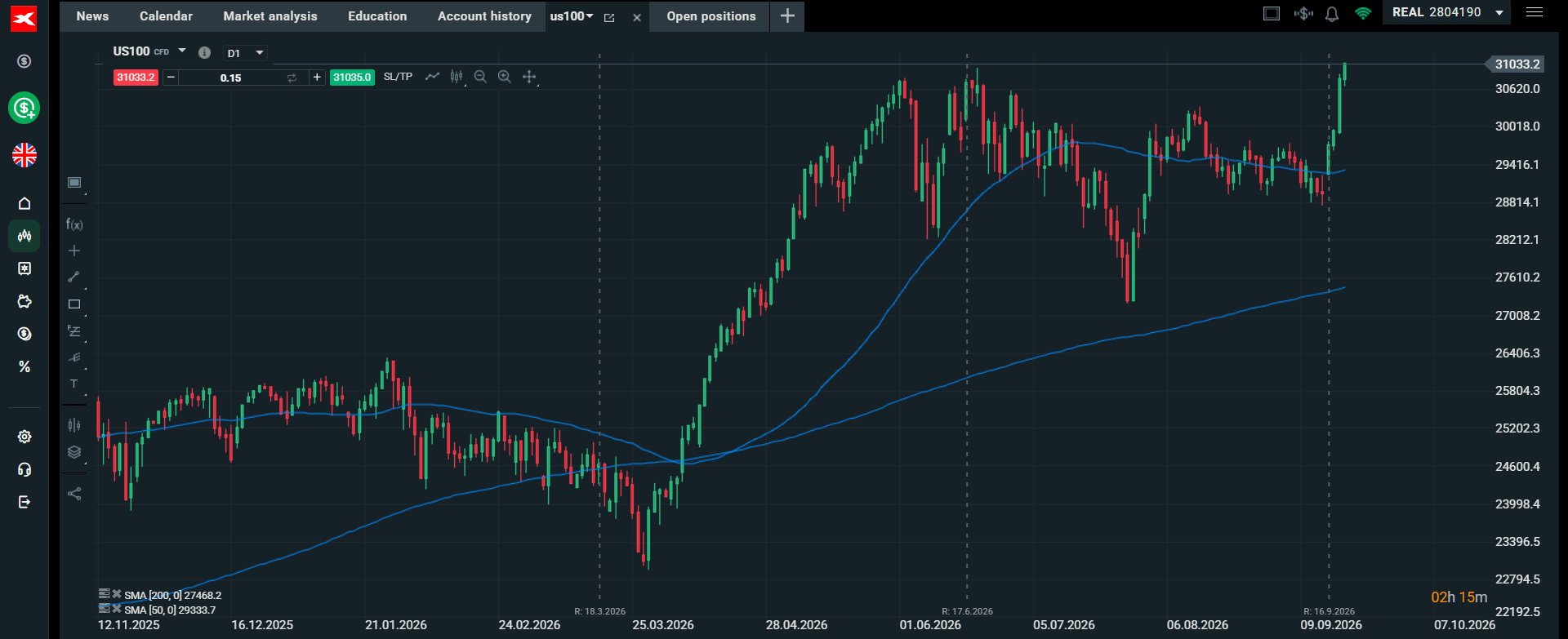
As we move into Q4, the outlook for the AI trade has improved. The Nasdaq 100 set a fresh record high in September after Meta’s new AI agent, Muse, saw robust demand in its first few weeks of release. This has reignited enthusiasm for the AI trade after fears of a clampdown to slow the development of AI triggered volatility in the trade earlier in September. There are still concerns about hyperscalers and how long their debt-funded capex binge will last, however, these are not critical and the tech trade is back on as we move into the final three months of the year.
The outlook for global stocks in Q4 is for the recent bout of choppiness to fade slightly although stocks will remain sensitive to oil and yields. Quality and earnings remain strong, which can protect deeper sell offs across the stock market space, and the FTSE 100 has a strong energy and commodity sector to act as a ballast during any bouts of global volatility. However, the UK index is not immune to a rates shock in the UK, which is worth noting.
The Q3 earnings season will start in mid-October, and this is the first test of margins since energy costs have been elevated.
The Commodities outlook
Oil is the swing factor. A de-escalation in the Middle East and the reopening of the Strait of Hormuz could pull Brent back toward the $80s quickly, and further supply disruption puts $100+ back in play.
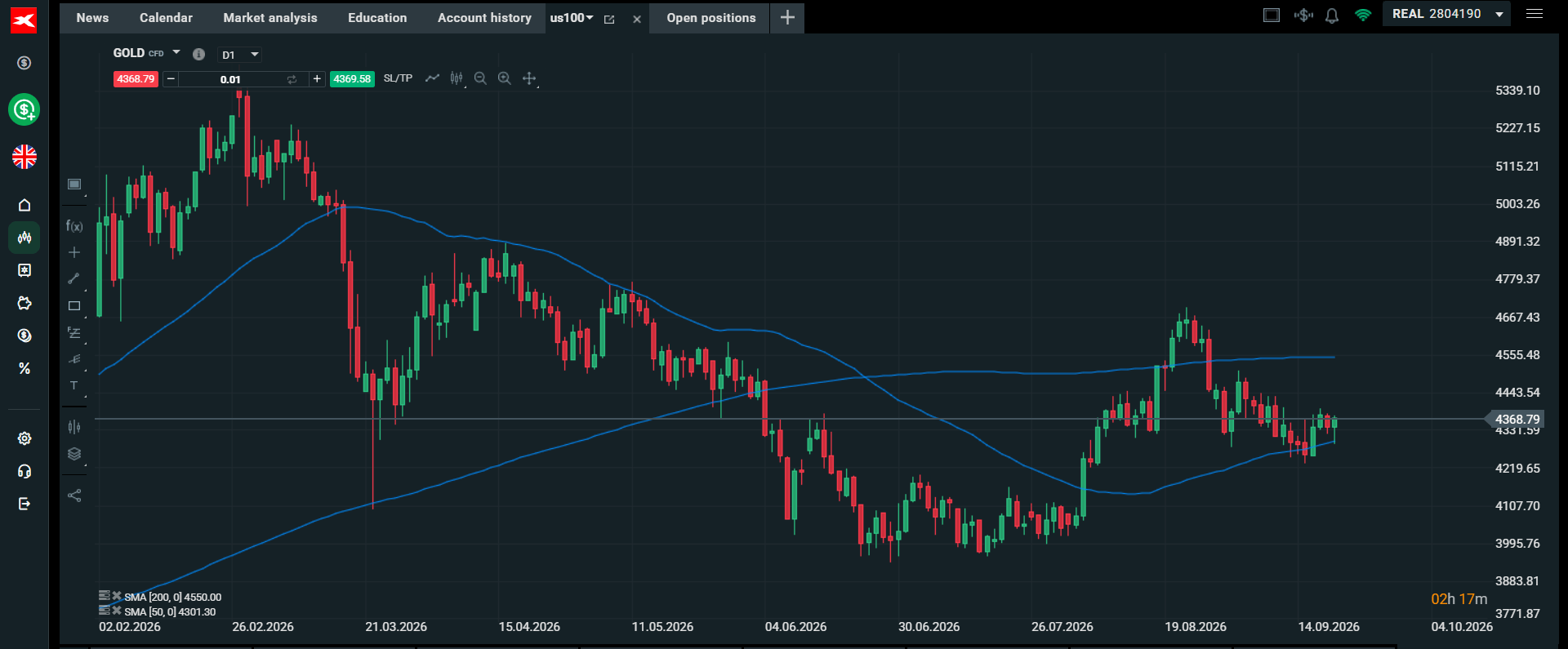
Gold also remains weak, and will continue to be impacted by geopolitics and forthcoming moves from major central banks. The gold price is mostly range bound, but it is struggling to break back towards $4500 due to the hawkish shift from global central banks, which is keeping demand for gold capped for now. If we see softer economic data, particularly from the US, or a shift in Fed stance, then the gold price has a chance to recover.
Key risks and dates to watch
- Oil and geopolitical headlines, which are two-way.
- The inflation path and the Fed's next move (late Oct and early Dec meetings).
- US midterms on 3 Nov and the UK autumn Budget, both potential volatility points.
- US growth concerns, since US payroll growth has been volatile this year.
Chart 1: The Brent crude oil price
Source: XTB. Past performance is not a reliable indicator of futrue results.
Chart 2: The gold price
Source: XTB. Past performance is not a reliable indicator of futrue results.
The Q3 earnings outlook
There are two themes worth noting in Q4: AI capex financing, and the Q3 earnings bar.
AI capex is shifting from a cash story to a credit story. Aggregate hyperscaler capex (Microsoft, Amazon, Alphabet, Meta, Oracle) is on track to overtake operating cash flow around Q3 2026, so most are now funding the build-out with debt rather than cash. Big tech has already issued about $100bn of bonds in 2026 to fund AI capex, with investors demanding record protection via credit default swaps. This is also blamed for some of the volatility in sovereign bond markets, as sovereign nations compete with hyperscalers to find investors to buy their debt.
The Q3 earnings season, which will start in mid-October, will be worth watching to see if there is any increase in hyperscaler capex guidance, alongside cloud growth and remaining performance obligations. This information will be a key driver for how the AI trade will perform in the last three months of the year, and whether or not tech can prop up the rest of the broader US market. As we head into Q4, more than 50% of the market capitalisation of the S&P 500 is now linked to the AI trade.
There could also be more scrutiny of the Q3 earnings reports since a large and growing share of hyperscaler "profit" is coming from marking up equity stakes in private AI companies rather than operating income. There are also growing concerns about circular financing, where a dominant AI infrastructure provider, such as Nvidia, invests billions of dollars into an AI start up or cloud partner, who then uses the funds to buy chips and infrastructure from the investor. Nvidia, Microsoft and Amazon are dominant investors, while OpenAI, Anthropic and Coreweave are key customers who receive the cash injections.
Some analysts have raised concerns about the sustainability of this model, due to issues around demand engineering for the investor and valuation inflation for the customer. This is why the Q3 earnings reports will be looked at even more closely than usual going forward.
Depreciation assumptions are the other pressure point that some analysts have raised. For example, if useful life assumptions for GPUs shorten from 5-6 years to 3-4 years, depreciation charges rise significantly. This is why it is worth looking at the nitty gritty details of these earnings reports, and big headline numbers might not be enough to boost share prices in the coming weeks.
Q3 earnings season sets a high bar into Q4
Although earnings growth has been strong this year, there is one concern that is starting to worry some analysts, consensus earnings growth has been revised up sharply: Q3 2026 EPS growth for the US is now expected at 28.7% y/y, up from 26.6% at the end of June. This is an unusually large positive revision versus the typical pattern of estimates falling during the quarter. It would also be the third straight quarter of growth above 25%, at some point that has to end.
However, this does not mean that US stocks are vulnerable, in a valuation context the average forward P/E ratio for the S&P 500 sits at 19.1, below the five-year average of 19.8. This is not a stretched level, however, it does rest on very high growth expectations that leave less room for disappointment.
There are some other pockets of good news as we head into Q4, breadth is genuinely improving and upside earnings revisions have broadened beyond Tech and Energy into Transportation, Finance, Aerospace, Industrials, Utilities and Construction. Thus, as we move towards the end of the year, there could be a genuine counter argument to the "narrow AI-only rally" narrative, as long as the guidance holds up.
The bar for Q3 earnings season is high, and the market's tolerance for capex-guidance beats without strong revenue and profit levels is thinning. If we get a hyperscaler miss or capex-guide-downgrade, this would be a plausible catalyst for a broader equity market pullback, that could rattle global indices, especially in the US and Asia.
Chart 3: The Nasdaq 100 hits a fresh record high as we approach the end of Q3.
Source: XTB. Past performance is not a reliable indicator of futrue results.

US Presidential Election 2024: Kamala Harris vs Donald Trump. Which candidate is better for stock markets?

UK Budget Preview: One month to go

Understanding ISAs: A Tax-Efficient Way to Save and Invest
This content has been created by XTB S.A. This service is provided by XTB S.A., with its registered office in Warsaw, at Prosta 67, 00-838 Warsaw, Poland, entered in the register of entrepreneurs of the National Court Register (Krajowy Rejestr Sądowy) conducted by District Court for the Capital City of Warsaw, XII Commercial Division of the National Court Register under KRS number 0000217580, REGON number 015803782 and Tax Identification Number (NIP) 527-24-43-955, with the fully paid up share capital in the amount of PLN 5.869.181,75. XTB S.A. conducts brokerage activities on the basis of the license granted by Polish Securities and Exchange Commission on 8th November 2005 No. DDM-M-4021-57-1/2005 and is supervised by Polish Supervision Authority.